
Microneedling for Hair Loss with Pluryal Hair Booster in New Westminster

Thinning hair can feel confusing because it rarely changes all at once. It shows up as a wider part, a ponytail that feels smaller, extra shedding in the shower, or a hairline that does not frame the face the way it used to. For people who love skin care and aesthetic treatments, scalp care is becoming the next logical step.
Microneedling for hair loss is one of the more talked-about options because it works with the body’s repair response rather than covering the issue. When paired with a professional hair-support treatment like Pluryal Hair Booster, it becomes a targeted scalp therapy designed to support healthier-looking, fuller-feeling hair over time.
This guide explains how the treatment works, what Pluryal Hair Booster adds, where to look for services in New Westminster, and what kind of results and schedule you can expect. This article is for general education only and is not a substitute for medical advice or a personalized consultation.

How microneedling for hair loss works
Microneedling uses a device with very fine needles to create controlled micro-channels in the skin. On the face, this process is often used to improve texture, acne scarring, and overall glow. On the scalp, the same principle applies, but the goal shifts toward scalp stimulation and support for hair follicles.
The tiny channels trigger a wound-healing response. This may increase local circulation, encourage cellular activity, and help the scalp make better use of topical or professional hair-support products used during treatment. For thinning hair, that matters because follicles need a healthy scalp environment to function well.
People often search for “does microneedling help with hair loss” because the treatment sounds simple, but the biology is more layered. Hair grows in cycles. Follicles move through growth, transition, resting, and shedding phases. Microneedling does not force instant growth, and it does not revive follicles that are no longer active. It may help support follicles that are still present but underperforming.
Common reasons people explore scalp microneedling include:
Early visible thinning
A wider part line
Mild to moderate density loss
Increased shedding after stress or hormonal shifts
Thinning related to androgenetic hair loss
Interest in a non-surgical treatment for thinning hair
The benefits are usually gradual, which is why consistency matters. When done properly, microneedling for thinning hair may help improve the look of density, support scalp quality, and complement other hair restoration plans recommended by a qualified provider.
Why the scalp needs more than basic hair care
Hair oils, scalp scrubs, and growth serums can be useful, but they often focus on the surface. A scalp treatment for hair loss needs to address the skin environment more directly.
Think of the scalp as the “soil” for hair. If the skin is inflamed, tight, poorly hydrated, or not well supported, hair may look weaker even when the strands themselves are handled carefully. That does not mean shampoo or supplements are useless. It means scalp health has its own role.
Microneedling adds a clinical-level stimulus that at-home scalp care cannot replicate safely. The treatment depth, device quality, sanitation, and product pairing all matter. This is one reason professional scalp microneedling New Westminster services appeal to people who already understand aesthetic treatments and want something more targeted than a shelf of hair serums.
What Pluryal Hair Booster adds to scalp microneedling
Pluryal Hair Booster is a professional hair-focused booster used in aesthetic treatment protocols to support scalp quality and the appearance of healthier hair. In a scalp treatment plan, it may be used to nourish and condition the scalp environment while microneedling creates channels and stimulates renewal.
The key idea is support. Pluryal Hair Booster for thinning hair is not a hair transplant, prescription medication, or instant regrowth product. It does not create new follicles where follicles are no longer active. Its role is to work within a broader regenerative aesthetics approach, where the treatment aims to improve the conditions that help existing follicles perform better.
Depending on the clinic protocol and the provider’s assessment, a hair booster treatment may help with:
Scalp hydration and comfort
Support for hair quality and resilience
The look of weak or thinning areas
Overall scalp rejuvenation
A more complete treatment experience than microneedling alone
A professional provider should explain exactly how the product is used, what the treatment feels like, what aftercare is required, and what results are realistic for your type of thinning.

Why pairing microneedling with a hair booster can make sense
Microneedling on its own provides stimulation. A hair booster adds topical or professionally delivered support, depending on the protocol used. Together, the goal is to create a stronger treatment than either step may offer alone.
This pairing is often described as scalp microneedling with hair booster, and it sits within the growing category of regenerative aesthetics for hair loss. The treatment does not take hair from one area and move it to another, as a transplant does. It also does not involve daily medication unless your provider recommends combining therapies.
For people looking for non-surgical hair restoration, this makes it appealing. There is no donor area, no implanted grafts, and no major downtime in the way people usually associate with surgery. The tradeoff is patience. Results build over time, and ideal outcomes depend on the cause and stage of thinning.
Where to get microneedling for hair loss in New Westminster
If you are searching for microneedling for hair loss New Westminster, look for a clinic that treats the scalp as seriously as the face. Hair thinning is personal, and the treatment should start with a proper consultation rather than a one-size-fits-all package.
In New Westminster, TRINITI Laser Clinic & Medi Spa is one location to ask about scalp microneedling with hair booster options, including Pluryal Hair Booster New Westminster services. As with any aesthetic treatment, protocols, eligibility, and product use may vary, so the best next step is a consultation with the clinic team.
A good provider should review:
Your pattern of hair thinning
How long the shedding or density change has been happening
Any recent illness, stress, medication changes, or hormonal shifts
Scalp health concerns, such as flaking, irritation, or sensitivity
Previous hair treatments or medications
Your expectations and timeline
The right clinic will also tell you when microneedling may not be the best first step. For example, sudden patchy hair loss, rapid shedding, scalp pain, or signs of infection should be assessed medically. Aesthetic scalp treatments can be helpful, but they do not replace diagnosis when hair loss has a medical cause.
Who is a good candidate for this treatment
The best candidates usually have thinning that is still in an active, treatable stage. That means there are still hair follicles in the area, even if the hair looks finer, sparser, or slower to grow.
You may be a good candidate if you have:
Mild to moderate thinning
A widening part or reduced crown density
Early hairline thinning
Fine, fragile hair that looks less dense than before
Seasonal, stress-related, or post-hormonal shedding that has stabilized
Interest in microneedling for hair density without surgery
This therapy can be appealing for people who already enjoy skin treatments like microneedling, laser facials, peels, or boosters, and want to apply the same skin-first thinking to scalp health.
It may not be suitable if you have:
An active scalp infection
Open wounds or severe irritation on the scalp
Certain bleeding disorders
A history of poor wound healing or keloid scarring
Uncontrolled inflammatory scalp conditions
Recent hair transplant surgery, unless cleared by your provider
Certain medical conditions or medications that affect healing
Pregnancy, breastfeeding, cancer treatment, autoimmune conditions, and prescription hair-loss therapies should also be discussed before treatment. The point is not to scare anyone away. It is to make sure the treatment fits the person, not just the symptom.

What the treatment feels like and how to prepare
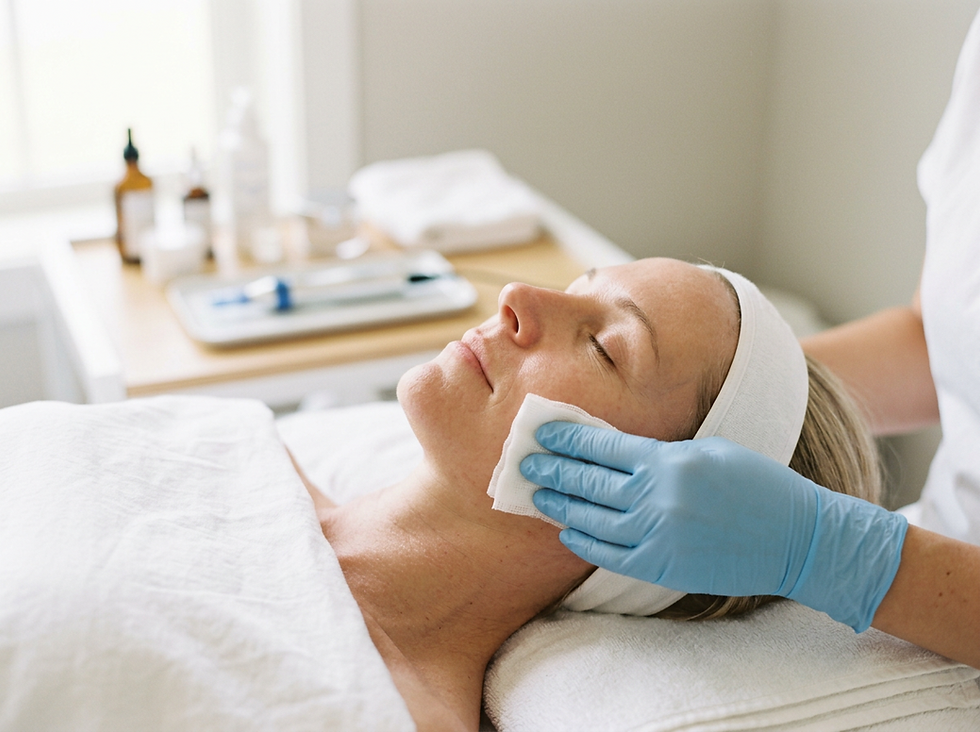
A scalp microneedling session usually begins with an assessment and cleansing of the treatment area. The provider may part the hair in sections so the device can contact the scalp evenly. Some areas may feel more sensitive than others, especially near the hairline or crown.
Most people describe the sensation as prickly, scratchy, or mildly uncomfortable rather than painful. Comfort measures vary by clinic and by the depth used. The treatment is usually focused and controlled, not aggressive.
Before your appointment, your provider may ask you to avoid certain products or treatments that could irritate the scalp. Fresh colour, harsh exfoliating scalp products, heavy styling residue, and intense sun exposure may not be ideal right before treatment. Follow the clinic’s instructions because they will be based on the device, product, and technique being used.
After treatment, the scalp may look pink or feel tender for a short period. Some people notice tightness, warmth, or mild sensitivity. You may also be told to avoid sweating, swimming, saunas, harsh hair products, or scalp scratching for a set time after the session.
Expected results and treatment frequency
Hair restoration takes time because hair growth takes time. Even when a treatment is working well, the first changes are often subtle.
Early improvements may include less shedding, better scalp comfort, or hair that feels stronger. Visible density changes usually take longer because new growth needs time to emerge and gain length. Many people track progress with consistent photos rather than relying on daily mirror checks, since day-to-day hair changes can be hard to judge.
A typical plan may involve a series of treatments spaced several weeks apart, followed by maintenance sessions as recommended by the provider. Some clinics may suggest monthly sessions at first, while others adjust the timing based on scalp sensitivity, hair goals, and response. Maintenance may be spaced farther apart once the initial series is complete.
Results vary based on:
Cause of thinning
How long the thinning has been present
Age and hormonal factors
Nutrition and overall health
Stress and sleep patterns
Scalp inflammation or dandruff
Home care and treatment consistency
The most realistic goal is improvement, not perfection. For some, that means denser-looking roots. For others, it means slowing the look of thinning or improving hair quality enough that styling feels easier.

How to get the most from scalp microneedling
The best outcomes usually come from treating hair loss as a full scalp health plan. Microneedling and Pluryal Hair Booster can play a meaningful role, but habits and maintenance still matter.
Support your results by keeping scalp care simple and consistent. Use gentle shampoo, avoid irritating leave-on products right after treatment, and follow aftercare closely. If your provider recommends combining the treatment with medical hair-loss options, supplements, or lab testing, ask why and how each step fits your case.
It also helps to set a baseline. Take clear photos in the same lighting before beginning treatment. Include the front hairline, part line, temples, and crown if those areas are concerns. Repeat photos every few weeks or as your provider suggests. This makes progress easier to see and prevents the frustration of checking too often.
The takeaway on Pluryal Hair Booster and microneedling
Microneedling for hair loss with Pluryal Hair Booster offers a thoughtful option for people who want a non-surgical, scalp-focused approach to thinning hair. It combines controlled stimulation with professional scalp support, which may help improve the look and feel of hair density over time.
For anyone exploring hair loss treatment New Westminster options, the key is to start with a proper consultation. Ask about candidacy, expected timelines, treatment frequency, aftercare, and whether TRINITI Laser Clinic & Medi Spa’s scalp treatment options fit your type of thinning.
The sooner thinning is assessed, the more options you may have. A healthier scalp is not a quick fix, but it can be a strong foundation for better-looking hair.

Comments